Concentrated liquidity, simply
BarkSwap's pools use concentrated liquidity (the same idea Uniswap v3 introduced). This page explains what that means for you as a liquidity provider — without the math.
The old way vs. the concentrated way
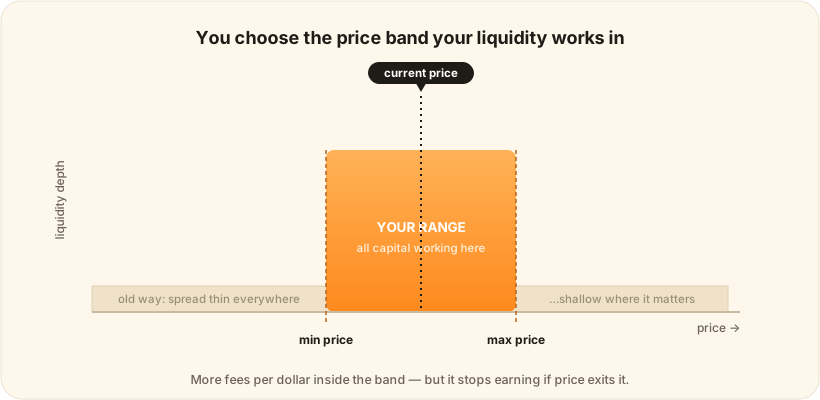
In an old-style pool, your deposited tokens were spread evenly across every possible price, from zero to infinity. The problem: trades only ever happen near the current price, so most of your money sat far away from the action, doing nothing.
Concentrated liquidity lets you pick a price range to focus your tokens in. All your capital works inside that band, so each dollar earns more fees while the price stays in range.
The trade-off
Concentration is powerful, but it cuts both ways:
- ✅ In range — you earn more fees per dollar than you would spreading the same money everywhere.
- ⚠️ Out of range — if the price moves outside your band, your position stops trading and stops earning fees until the price comes back (or you adjust your range).
So choosing a range is a balance: tighter ranges earn more while they're in range but fall out of range more easily; wider ranges earn less per dollar but keep working across bigger price swings.
- Stable pairs (two tokens meant to track each other) can use a tight range — the price barely moves.
- Volatile pairs usually want a wider range so you don't constantly fall out of it.
- Not sure? Start wider and adjust as you learn how the pair behaves.
Your position is an NFT
When you provide concentrated liquidity, you receive a position NFT that records your pair, your price range, and how much you deposited. It's the receipt for your liquidity — and the thing you stake into a gauge to start earning BARK emissions on top of fees.
Dynamic fees, no fee tiers
On some DEXs you choose a fixed fee tier (0.05%, 0.30%, 1.00%) when you add liquidity. BarkSwap doesn't. Each pool has a single dynamic fee that adapts to market conditions automatically, so there's one pool per pair to worry about, not several. You don't have to pick a tier — just a price range.
What about "impermanent loss"?
If the two tokens' prices drift apart while you're providing liquidity, you can end up with a bit less value than if you'd just held the tokens — this is impermanent loss. It's a normal part of being an LP, and the fees plus BARK emissions you earn are what compensate for it. Concentrated ranges can magnify both the fees and the impermanent loss, which is another reason to choose your range thoughtfully.
→ Ready to try it: Provide liquidity.